
Grade 3
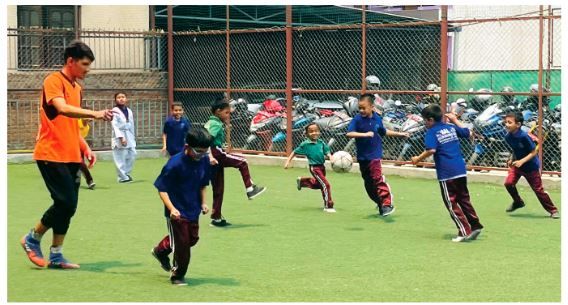
Grade 3 at Himalaya College sharpens core NEB subjects and independent study habits for eight-year-olds at our English medium school in Koteshwor, Kathmandu.
Duration
1 Academic Year
NEB Basic Level Continuity
Grade 3 sits in the middle stretch of Basic Level, the seven-year band from Grade 1 through Grade 8 defined by Nepal's National Curriculum Framework. By this point, children at Himalaya College are expected to manage a full subject timetable with a fair amount of independence, and our Grade 3 classroom in Koteshwor, Kathmandu is built around that expectation. Lessons move faster than in Grade 2, homework carries more weight, and children start to be responsible for organising their own notebooks and remembering assignments, with teacher support close at hand whenever it is needed.
Subjects Taught
The familiar eight subjects continue: English, Nepali, Mathematics, Science, Social Studies, Health and Physical Education, Moral Education, and Computer Education. English lessons introduce grammar rules more formally alongside comprehension and creative writing, Nepali strengthens reading and composition, and Mathematics covers multiplication tables, division, basic fractions and simple word problems. Social Studies widens into Nepal's geography, culture and civic life at a level suited to eight-year-olds, while Science introduces simple experiments and observation-based learning rather than only textbook facts.
Learning Outcomes
Children finishing Grade 3 are generally expected to write a structured paragraph with a clear beginning and end, read and understand a short chapter independently, solve multi-step arithmetic problems, and explain a simple Science concept, such as states of matter or plant parts, using their own words. Computer Education at this stage often includes basic typing practice and simple, guided use of educational software, building comfort with a keyboard well before any formal computer subject in later grades. Moral Education continues shaping behaviour through discussion of real situations rather than abstract rules.
Teaching Approach
Grade 3 classrooms balance direct instruction with group projects, presentations and hands-on Science activities, since children at this age learn a great deal by doing rather than only listening. Teachers also begin encouraging students to check their own work before submitting it, a small habit that pays off considerably by the time they reach Grade 4 and beyond. As with every class at our school in Koteshwor, sections are kept small enough for a teacher to notice when a child is quietly falling behind in a subject like Mathematics or English writing.
Continuous and Comprehensive Evaluation
Assessment in Grade 3 follows the CCE model used throughout Basic Level, drawing on classwork, unit tests, homework, project work and classroom participation rather than a single final exam. This gives a rounder, fairer picture of a child's actual ability, and it lets teachers step in early with extra practice if a particular subject needs it. Parents receive detailed, subject-wise feedback each term, so a Grade 3 report card reads as a genuine account of where a child stands, not just a set of marks.
Message from the Principal
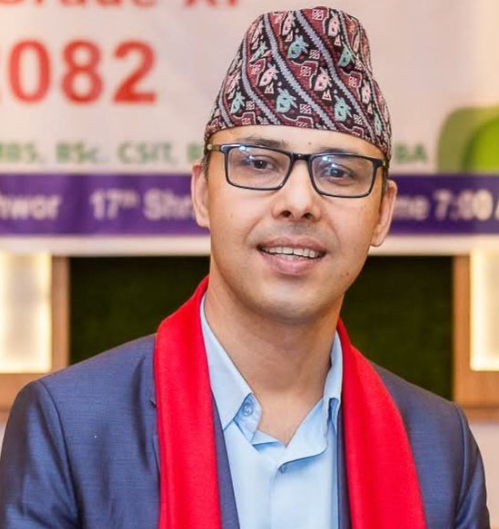
Hari Prasad Pant
Coordinator - School
As Coordinator - School at Himalaya College in Koteshwor, Kathmandu, the work is about supporting students, parents and colleagues. Coordination work keeps timetables, teaching, notices and student support organised, so that learners can concentrate on their studies. Students and parents are welcome to approach the coordination office with questions about classes, notices and academic guidance.
For School students and parents this means clear information about classes, notices and the support available. Information about admissions, notices and procedures is shared openly, and questions are always welcome. Working closely with teachers and the administration helps keep the day-to-day life of the college running smoothly for students. We look forward to welcoming you to Himalaya College and helping wherever we can.
Interested in Grade 3?
Fill out this form and our admissions team will guide you through the process.
First, which level are you interested in?
Other School Programs
Nursery
Nursery at Himalaya College welcomes three-year-olds into a warm, play-based classroom in Koteshwor, Kathmandu, building early language, motor and social skills through guided play.
LKG
LKG at Himalaya College builds on early play with structured pre-literacy and pre-numeracy activities, guiding four-year-olds in Koteshwor, Kathmandu toward confident classroom habits.
UKG
UKG at Himalaya College prepares five-year-olds for Grade 1 with structured literacy, numeracy and classroom-readiness skills at our school in Koteshwor, Kathmandu.
Grade 1
Grade 1 at Himalaya College marks the start of NEB Basic Level, English medium schooling, with structured subjects, daily practice and Continuous and Comprehensive Evaluation.
Grade 2
Grade 2 at Himalaya College strengthens core NEB subjects for seven-year-olds, building reading fluency, applied maths and science skills at our school in Koteshwor, Kathmandu.
Grade 4
Grade 4 at Himalaya College develops stronger analytical and writing skills across the NEB curriculum for nine-year-olds at our school in Koteshwor, Kathmandu.