
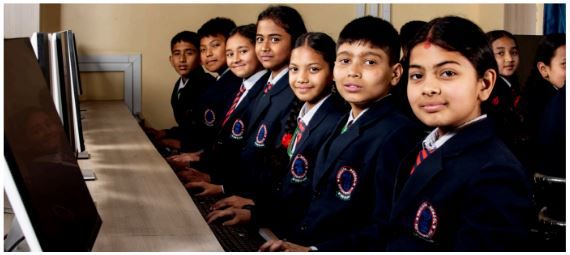
Grade 6
Grade 6 opens Lower Secondary at Himalaya College in Koteshwor, Kathmandu, introducing Optional Mathematics and subject-specialist teaching on the NEB curriculum path.
Duration
1 Academic Year
Stepping Into Lower Secondary
Grade 6 opens the Lower Secondary phase of the National Curriculum Framework, and the shift is real, not cosmetic. Pupils move from one broadly generalist classroom to a timetable built around subject specialists, and for the first time at Himalaya College they meet Optional Mathematics as a distinct subject alongside compulsory Mathematics. As a school in Koteshwor, Kathmandu that follows the NEB curriculum pathway from this stage onward, we treat Grade 6 as the year habits either firm up or start slipping, so we watch it closely.
Subject Line-Up
- English
- Nepali
- Mathematics
- Science
- Social Studies
- Health, Population and Environment
- Computer Science
- Moral and Social Education
- Optional Mathematics
- Physical Education
Computer Education becomes Computer Science at this point, with pupils writing simple instructions and working through logical problems rather than only learning applications. Moral Education is renamed and reframed too, folding in social responsibility and citizenship alongside personal conduct.
Why Optional Mathematics Now
Introducing Optional Mathematics in Grade 6 gives pupils three full years before Secondary Level to decide, with evidence rather than guesswork, whether they want to carry it forward into Grades 9 and 10. The subject covers set theory, number patterns, and early algebraic thinking that compulsory Mathematics does not have room for. Not every pupil takes to it immediately, and that is expected; teachers watch closely during the first term and adjust pace rather than assuming struggle means a poor fit.
Academic Demands
English writing tasks lengthen into structured essays and formal letters. Science introduces the periodic table, basic classification, and simple laboratory procedure, with pupils recording their own observations instead of copying a demonstration. Social Studies covers Nepal's constitution and governance structures at an age-appropriate level, connecting classroom material to how the country is actually run. None of this is presented as a leap; each subject builds directly on what was covered in Grade 5, just with more independence expected of the pupil doing the work.
Teaching Approach
Subject teachers at this level set homework that requires pupils to organise their own notes and manage a weekly workload across nine subjects, a skill in itself. Group discussion, short presentations, and lab-based Science sessions replace some of the pure lecture format pupils were used to. A pupil who arrives at Himalaya College for Grade 6 admission from another school is given a settling-in period, since Lower Secondary expectations vary quite a bit between institutions across Kathmandu.
Settling Into a Bigger School Day
Nine subjects and a rotating timetable can feel like a lot after the more contained routine of primary school, so form teachers at Himalaya College spend the opening weeks of Grade 6 checking in on how pupils are coping, not just on what marks they are getting. A pupil who seems quiet or overwhelmed in the first month is usually just adjusting to carrying more books, more subject teachers, and more independent responsibility, and that settling period is treated as normal rather than a warning sign. By the second term, most pupils have found their own rhythm for managing homework across the week.
How Progress Is Measured
Assessment continues under the Continuous and Comprehensive Evaluation framework, with unit tests, terminal examinations, and project or practical work all contributing to the final grade. Letter grading is used on the report card, matched with teacher comments that go beyond the mark itself. Parents receive a clear picture of where a child stands in each of the ten subjects, which matters most in Mathematics and Science, where a shaky Grade 6 foundation tends to show up later in Grade 8 and beyond.
Grade 6 is, in short, the year the academic stakes rise a notch. Pupils who handle it well usually find Grades 7 and 8 easier to manage, because the study habits, not just the content, are what carry forward.
Message from the Principal
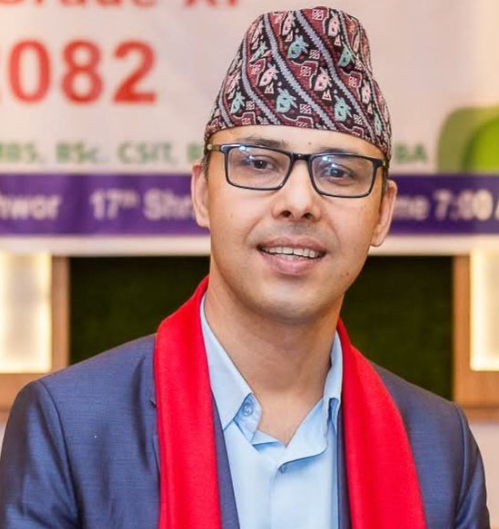
Hari Prasad Pant
Coordinator - School
As Coordinator - School at Himalaya College in Koteshwor, Kathmandu, the work is about supporting students, parents and colleagues. Coordination work keeps timetables, teaching, notices and student support organised, so that learners can concentrate on their studies. Students and parents are welcome to approach the coordination office with questions about classes, notices and academic guidance.
For School students and parents this means clear information about classes, notices and the support available. Information about admissions, notices and procedures is shared openly, and questions are always welcome. Working closely with teachers and the administration helps keep the day-to-day life of the college running smoothly for students. We look forward to welcoming you to Himalaya College and helping wherever we can.
Interested in Grade 6?
Fill out this form and our admissions team will guide you through the process.
First, which level are you interested in?
Other School Programs
Nursery
Nursery at Himalaya College welcomes three-year-olds into a warm, play-based classroom in Koteshwor, Kathmandu, building early language, motor and social skills through guided play.
LKG
LKG at Himalaya College builds on early play with structured pre-literacy and pre-numeracy activities, guiding four-year-olds in Koteshwor, Kathmandu toward confident classroom habits.
UKG
UKG at Himalaya College prepares five-year-olds for Grade 1 with structured literacy, numeracy and classroom-readiness skills at our school in Koteshwor, Kathmandu.
Grade 1
Grade 1 at Himalaya College marks the start of NEB Basic Level, English medium schooling, with structured subjects, daily practice and Continuous and Comprehensive Evaluation.
Grade 2
Grade 2 at Himalaya College strengthens core NEB subjects for seven-year-olds, building reading fluency, applied maths and science skills at our school in Koteshwor, Kathmandu.
Grade 3
Grade 3 at Himalaya College sharpens core NEB subjects and independent study habits for eight-year-olds at our English medium school in Koteshwor, Kathmandu.